

In this blog post, Richard Ansell (Birkbeck, University of London) discusses several ways that the Bibliography of British and Irish History is contributing to his research on non-elite travel writing, as part of the wider project ‘Written Worlds: Non-Elite Writing in Seventeenth-Century England’.

The Written Worlds project at Birkbeck is exploring the cultural, social, and political work done by non-elite writing in seventeenth-century England. We are surveying manuscript archives across the UK and beyond, alongside online repositories of print, with the aim of building a database of texts written by people below the level of the gentry between 1570 and 1730. This should transform the presence of non-elite writing in multidisciplinary scholarship on the early modern period. The project is divided into strands on writing associated with London, the provinces, women, and travel and encounter, the last of which is my responsibility. The assessment of a writer’s ‘non-elite’ status is a dynamic process, dependent on a range of factors such as wealth, education, race, gender, and occupation, but it is arguably most straightforward for my travel strand. If the term is residual, merely denoting those who were not in some way ‘elite’, that is in fact a strength for my purposes: I envisage non-elite travel writers as all those who have been left out of the traditional focus on narratives by independently wealthy, classically educated, white Englishmen.[1] Identifying travel accounts by other kinds of writer also means adopting a more capacious definition of ‘travel’, bending the usual boundaries of foreign/domestic and voluntary/involuntary movement. The Bibliography of British and Irish History (BBIH) reflects the current state of published scholarship, so there are not yet convenient terms in its unique subject tree for either ‘non-elite writers’ or ‘non-elite travel’. Equally, our project looks at a period before the ‘Working classes’ subject term might allow us to find relevant texts. Since Written Worlds is a survey of overlooked and uncategorised material, the BBIH has contributed in more creative ways.
From the outset, the Bibliography has provided a sense of what non-elite travel writing has already been published. The new interface has made it easier to combine several subject terms, and a search for ‘Travel writing’ and ‘Primary sources: editions and guides’ for the period 1570–1730 returns 63 hits. They include Michael G. Brennan’s English Travellers to Venice, 1450–1600, featuring a journal and a legal statement by English servants in Italy.[2] Brennan’s wide-ranging collection includes accounts by elite and non-elite travellers, but the replacement of ‘Travel writing’ with other subjects can suggest targeted material. As an inspiration for making journeys in a missionary capacity and for writing about them, the Society of Friends has been prominent in my research so far. A combination of ‘Primary sources: editions and guides’ with the additional subjects ‘Quakers’ and ‘Women’ returns 25 editions or discussions of seventeenth-century women’s travel, including Stefano Villani’s 2003 publication of Katharine Evans and Sarah Cheevers’s True Account of the Great Tryals and Cruel Sufferings Undergone by Those Two Faithful Servants of God (1663).[3] The writers left England in 1658 with the intention of spreading the Quaker message in Alexandria, but had got as far as Malta when they were interrogated by the Inquisition and imprisoned until 1662. Upon their release and return to England the following year, fellow Quakers put their letters and ‘sufferings’ into print. Evans and Cheevers’s account of their journey and imprisonment has received plenty of attention from scholars of religion and women’s writing (as their respective 12 and 11 hits in the BBIH suggest), but they are not often considered as travel writers. The terms ‘travel writing’ and even more so ‘travel literature’ have tended to be reserved for certain kinds of text and writer, and a more flexible approach is needed to get at a broader range of experience.
The study of early modern travel is now an exciting field, in which many scholars are looking to move beyond those writers whom Eva Johanna Holmberg has called ‘the grammar-school-educated “usual suspects”’.[4] The BBIH has kept me up to date with the directions in which historians and literary scholars are moving, particularly through the subject terms ‘Travel’ and ‘English people outside England’ for the period 1570–1730, as well as the possibility of searching by book series, including Amsterdam University Press’s new ‘Connected Histories in the Early Modern World’. Nandini Das, João Vicente Melo, Haig Z. Smith, and Lauren Working’s Keywords of Identity, Race and Human Mobility in Early Modern England and Das’s Lives in Transit in Early Modern England have been especially useful on the disconnect between a rhetoric of humanist travel, undertaken by men of independent means for their pleasure or instruction, and the reality of movement by a broad constituency of early modern people, whose experiences Das’s second book pieces together in a series of biographies.[5] These are essential materials for thinking about what constitutes travel, and who gets to be a travel writer.
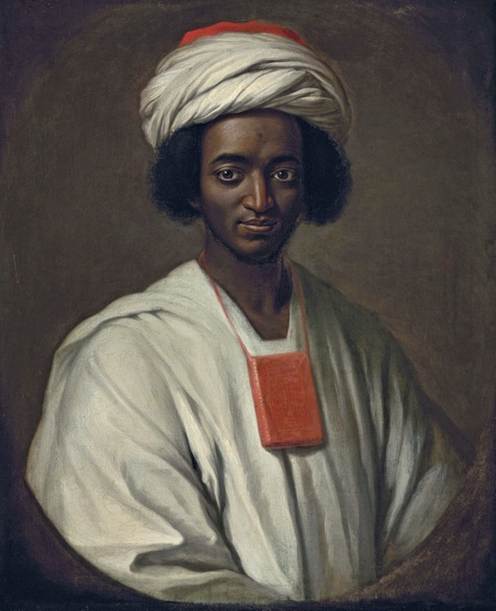
There are already some excellent studies of individuals. Among the 53 results for a combined search for the subjects ‘Slave trade’ and ‘Biography’ is Paul Naylor and Marion Wallace’s 2019 article on Ayuba Sulayman (or Suleiman) Diallo, ‘Author of His Own Fate?’[6] Diallo, the son of an imam from Bundu in West Africa, was enslaved in 1731 and transported to Maryland, where he worked on a tobacco plantation. There he and his high level of education came to the attention of a local clergyman, Thomas Bluett, who arranged for Diallo to be brought to London, where funds were gathered to secure his freedom. While in London, Diallo worked with English scholars and impressed aristocratic society, who knew him as ‘Job Ben Solomon’. The following year, he returned to Bundu, where he maintained connections with the Royal African Company. As Naylor and Wallace show, writing about his life, enslavement, and forced mobility was central to Diallo’s efforts to change his circumstances. They include letters in Fulfulde and Arabic from his time in Maryland, communicating with his father and attempting to arrange a ransom in England; an English manuscript account of his origins and experiences, apparently dictated to Bluett; and the biographical Some Memoirs of the Life of Job (1734), which came out in print under Bluett’s name but appears—in the light of the dictated manuscript—as a collaborative production.[7] As a result, Diallo’s accounts challenge the boundaries of both ‘travel writing’ and single-authored ‘writing’ itself.
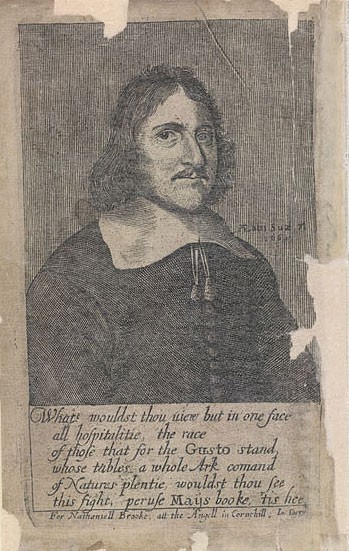
My most routine use of the BBIH has been to follow up leads for potential non-elite travel writers, gathered from searches in the online catalogues of archives and repositories. For a start, the ‘Person as subject’ search option is not limited to elite individuals, as Evans (12 results), Cheevers (11), and Diallo (2) each indicate. There are also four results for ‘May, Robert, 1588–’, a cook who went to France for five years of study funded by his aristocratic employers. Much later, in his 70s, May published The Accomplisht Cook, or, The Art and Mystery of Cookery (1660), a recipe collection that would go through five editions by 1685. In France, he recalled, he had been ‘an eye-witness of their Cookeries’ and gleaned much from ‘their Manuscripts, and Printed Authors’.[8] The BBIH features discussions of his sturgeon recipes, which were ‘rooted in nostalgia’ for the England of Charles I; his bisques as a harmonisation of foreign influences on Englishness; his advocacy of print, rather than on-the-job learning, for culinary knowledge-transfer; and a facsimile of his 1685 edition.[9] They show May putting his time abroad to use outside a narrative of his travels, drawing on his French studies to contribute to national conversations about politics and culture in a successful book.
As Diallo, Evans, Cheevers, and May suggest, in very different circumstances, one of the major findings of the Written Worlds project so far has been the breadth of topics that our texts cover. As a consequence, once I have identified a potential non-elite travel text, I often need to research disparate themes to establish a writer’s background and/or context. The BBIH’s capacity to produce bibliographies on a huge range of topics has been invaluable here, especially its potential for studies of local history through the Places tree. For writers of single texts, who have often left little else to the historical record, a large part of contextualising them has been situating them as much as possible in their time and place. The BBIH has remained an indispensable aid for my work on such a wide-ranging project, helping me to understand not only non-elite travellers’ writings and their worlds, but also the scholarly debates on which they can provide exciting new angles.
Header image: Detail from Willem Blaeu, Europa recens Descripta (Amsterdam, 1640). Wikimedia commons (public domain).
[1] For discussion of the term ‘non-elite’, see Mark Hailwood, ‘Who is Below?’ , The Many-Headed Monster blog, 19 July 2013, at https://manyheadedmonster.com/2013/07/19/who-is-below/ (accessed 28 November 2025).
[2] Michael G. Brennan, ed., English Travellers to Venice, 1450–1600, Hakluyt Society, 39 (London: Routledge, 2022).
[3] Stefano Villani, ed., A True Account of the Great Tryals and Cruel Sufferings Undergone by Those Two Faithful Servants of God, Katherine Evans and Sarah Cheevers: la vicenda di due quacchere prigioniere dell’inquisizione di Malta (Pisa: Scuola Normale Superiore, 2003).
[4] Eva Johanna Holmberg, ‘Introduction: Renaissance and Early Modern Travel – Practice and Experience, 1500–1700’, Renaissance Studies, 33:4 (2019), 515–23, at 515–17. See also Eva Johanna Holmberg, Writing Mobile Lives, 1500–1700 (Cambridge: Cambridge University Press, 2024).
[5] Nandini Das, João Vicente Melo, Haig Z. Smith, and Lauren Working, Keywords of Identity, Race, and Human Mobility in Early Modern England (Amsterdam: Amsterdam University Press, 2021); Nandini Das, ed., Lives in Transit in Early Modern England: Identity and Belonging (Amsterdam: Amsterdam University Press, 2022).
[6] Paul Naylor and Marion Wallace, ‘Author of His Own Fate? The Eighteenth-Century Writings of Ayuba Sulayman Diallo’, Journal of African History, 60:3 (2019), 343–77.
[7] Thomas Bluett, Some Memoirs of the Life of Job, The Son of Solomon, High Priest of Boonda in Africa (London: Richard Ford, 1734).
[8] Robert May, The Accomplisht Cook, or, The Art and Mystery of Cookery, fifth edn (London: Obadiah Blagrave, 1685), preface ‘To the Master Cooks, and to such young Practitioners of the Art of Cookery, to whom this Book may be useful’.
[9] Rob Wakeman, ‘Preserving the Last Sturgeon: Appetites for Sustainability in Seventeenth-Century Recipe Books’, Early Modern Studies Journal, 8 (2022); Sandra Sherman, ‘“The Whole Art and Mystery of Cooking”: What Cookbooks Taught Readers in the Eighteenth Century’, Eighteenth-century Life, 28:1 (2004), 115–35; David B. Goldstein, ‘How to Make a Bisk: The Restoration Cookbook as National Restorative’, in Madeline Bassnett and Hillary M. Nunn, eds, In the Kitchen, 1550–1800: Reading English Cooking at Home and Abroad (Amsterdam: Amsterdam University Press, 2022); Robert May, The Accomplisht Cook, or, The Art and Mystery of Cookery. A Facsimile of the 1685 Edition, ed. Alan Davidson, Marcus Bell, and Tom Jaine (Totnes: Prospect Books, 2000).
Email: r.ansell@bbk.ac.uk
Bluesky: @richardjansell.bsky.social