
Rachel Peacock recently completed a summer internship at the IHR, where she focused on medical history and health in the Bibliography of British and Irish History. In this blog, she explores Victorian understandings of mental illness through the example of intruders on Queen Victoria’s privacy.
Intruders on Royal Privacy
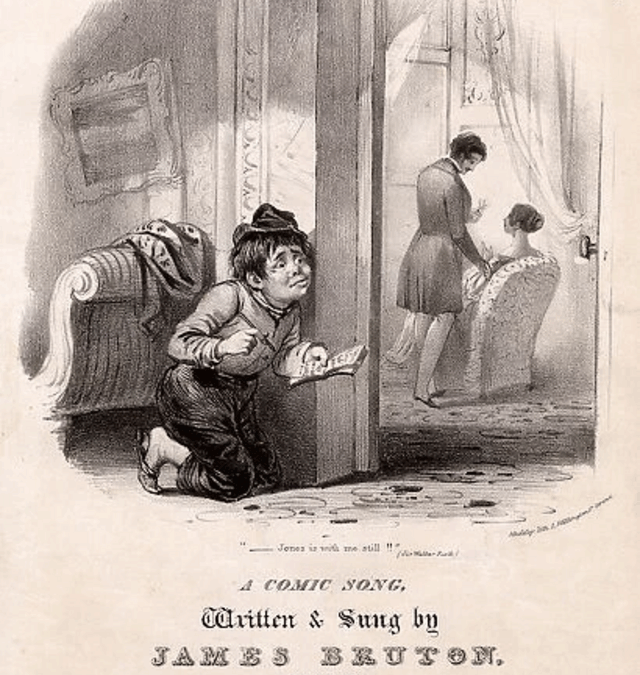
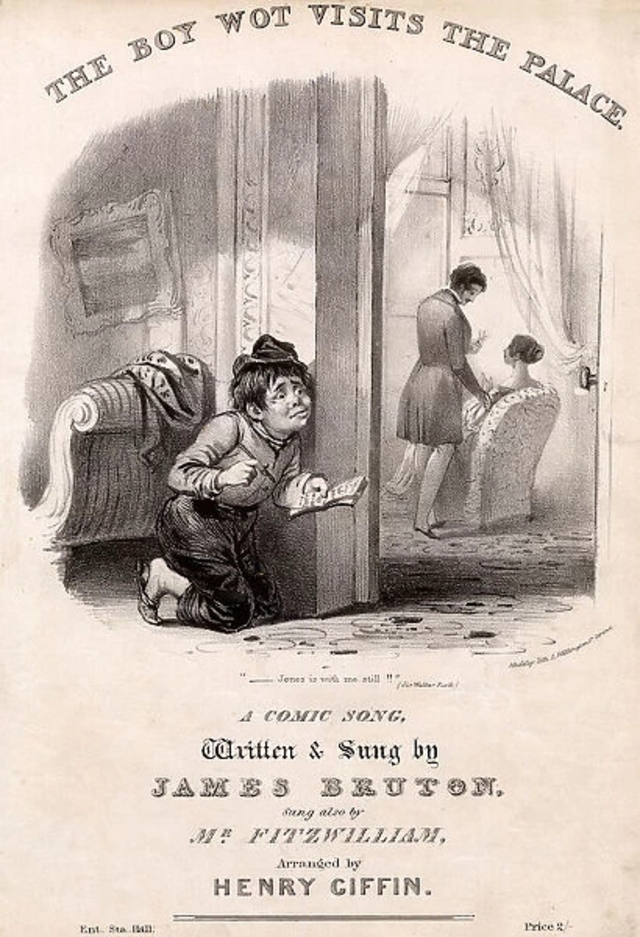
Between 1837 and 1901, Queen Victoria and the British royal family endured nearly 100 intrusions on their privacy from individuals whom we would today refer to as ‘stalkers’.[1] Intruders on royal privacy had a variety of motivations behind their attempts to access royalty. Some believed that they were in love with Victoria and wanted to claim her hand in marriage, while others declared that they were long-lost members of the royal family. Many intruders wanted private audiences with the Queen, with some believing that the Queen had promised them personal favours or assistance in financial matters.
Intruders often went to great lengths to access royalty. Many intruders attempted to break into royal palaces. One intruder was discovered in the Princess Royal’s nursery,[2] while another was found lurking outside the Queen’s bedchamber.[3] Some maintained physical distance and wrote letters to the Queen,[4] while others approached Victoria when she appeared in public. One man, Edward Hayward, grabbed the reins of the Queen’s horse so she would stop and accept his petition during an afternoon ride in Hyde Park.[5]
Reports of intrusions on royal privacy immediately sparked speculation about each intruder’s mental state. More than 80% of intruders on royal privacy were believed to be labouring under forms of mental illnesses.[6] Many intruders were sentenced to asylums, including Bethlem Royal Hospital, Broadmoor Criminal Lunatic Asylum, St. Luke’s Hospital, Hanwell Asylum, and Colney Hatch Asylum. Others were sent to local workhouses, and a small number of intruders who were deemed to be less threatening to the royal family were sent to the care of their friends and families.
Intruders on royal privacy highlight the ways Victorians understood mental illness. For instance, evaluations of the intruders’ mental states reflected Victorian assumptions that mental illness could be measured through one’s deviation from expectations of respectable, gendered behaviour.[7] When Julia Watkins was told she could not be admitted to Buckingham Palace to see the Queen, she smashed a mirror in the gatekeeper’s lodge. Watkins’ violent and unfeminine outburst was interpreted by the police, the local magistrate, and asylum officials as evidence that she was not of sound mind.[8]
In many cases, intruders on royal privacy were sentenced to asylums or workhouses based on the testimonies of their friends and family, rather than professional diagnoses from medical professionals. As Joel Peter Eigen explains, physicians were not respected as expert witnesses in the early nineteenth century, and many lay people believed that they were equally as capable of discerning the signs of mental illness.[9] In November 1837, John Goode charged Victoria’s carriage and threatened to remove her from the throne. Rather than calling any medical professionals to testify at Goode’s trial at the Court of Queen’s Bench, Goode’s brother was summoned to explain Goode’s history of strange and erratic behaviour.[10] Similarly, when Ann Hughes was brought before a magistrate after trying to enter Buckingham Palace, claiming that she was Victoria’s closest friend and travelling companion, the magistrate sent for Hughes’ husband to provide an account of her mental state.[11] This emphasis on familial testimony highlights the type of evidence Victorians both accepted and valued in evaluations of mental illness.
https://upload.wikimedia.org/wikipedia/commons/thumb/c/c4/The_Boy_Wot_Visits_The_Palace.webp/640px-The_Boy_Wot_Visits_The_Palace.webp.png
BBIH and the History of Mental Illness
BBIH is a great resource for historians researching the history of mental illness in the British and Irish contexts. BBIH’s reading lists are the best place to start, as they highlight recent scholarships that is freely available. While there is not a reading list dedicated specifically to the history of mental health, historians can find a selection of relevant sources in the reading lists on the history of disability and the history of emotions.
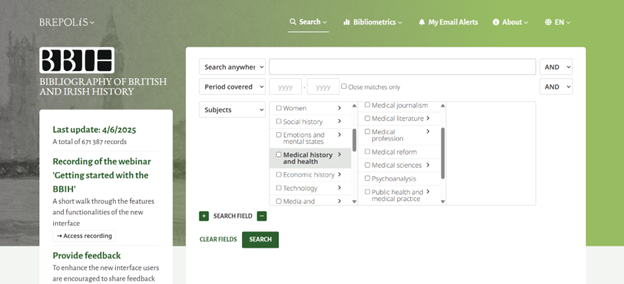
BBIH’s search interface also offers several search options for historians researching topics in the history of mental illness. Historians can use the ‘search anywhere’ function to search for a keyword related to their area of study. The ‘search anywhere’ function conducts a comprehensive search of BBIH’s subject tree, bibliographic information, and other search fields. Adding search terms such as time period covered, place, and subject can help reduce the number of search results and create a more focused hitlist. Another option is to search BBIH’s catalogue using the subject tree. ‘Medical history and health’ is one of the main topics under the subject tree, and users can navigate through the many subcategories to find more specific and relevant research terms. For historians of mental illness, the subcategory ‘mental health and mental health care,’ located under ‘public health and medical practice in relation to particular areas of the body’ < ‘public health and medical practice’, is a good place to start. However, selecting this topic in the subject tree yields 2,381 results, so additional search terms are needed to narrow the hitlist. Using our previous example of intruders on royal privacy, I could set the ‘time period covered’ to the Victorian era (1837-1901). This reduces the list to 1,205 – 1,000 fewer results than our previous search, but still quite large. Adding a location (most intrusions occurred in London) further reduces the results to 123. Since several intruders were placed in Bethlem Royal Hospital, I could add this to the ‘search anywhere’ box. This reduces the hitlist to a very manageable and focussed 31 sources.
Critical Cataloguing and Medical History
BBIH uses critical cataloguing to ensure that the terminology used in the subject tree is accessible and inclusive. Critical cataloguing is the process in which libraries seek to address and overcome the biases and power structures which have shaped library catalogues and terminology.[12] In the context of medical history and health, this involves replacing ableist, sexist, and racist medical terminology with more appropriate alternatives. BBIH’s emphasis on critical cataloguing means that some terms medical historians may use in their own work might not appear in the subject tree. For example, while many historians of mental illness in the nineteenth century use the term ‘madness,’ BBIH’s subject tree uses ‘mental health’. If a keyword is not yielding results in the ‘search anywhere’ box, it might be worth checking BBIH’s subject tree to see if the database uses another term that might yield more results.
Historians of medicine and health have a unique challenge in navigating a balance between using accessible terminology and maintaining historical accuracy. While historians write about the past, they also write for audiences in the present who hold contemporary values and sensibilities. There are many resources historians can consult if they are interested in using more critical language in their work, including the Cultural Heritage Network’s Inclusive Terminology Glossary.[13] In addition to suggesting alternatives for more dated medical terminology, this glossary also provides short explanations of why certain words are offensive or harmful, and how the alternatives are more accessible.
As part of my internship for BBIH, I reviewed the terminology included under the ‘Medical History and Health’ section of BBIH’s subject tree and suggested changes to ensure that the terminology is up to date and reflects the objectives of critical cataloguing. Reviewing BBIH’s subject tree prompted me to reflect on the language I use in my dissertation to describe the supposed mental states of intruders on royal privacy, and whether there are alternative terms that might be more appropriate. Before working with BBIH, I had never thought about the ways databases or libraries can direct our research. Instead, I simply viewed them as tools to access sources. However, my internship has taught me how databases and libraries can influence historians in more subtle ways, including shaping the language we use, and prompting us to be more critical in our writing.
[1] These intruders were identified through extensive newspaper searches, as well as a police ledger dedicated to intruders on royal privacy. See The National Archives of the UK: MEPO 2/44, ‘Insane Persons and who have come under the cognizance of the Police Force for Offences against Her Majesty Queen Victoria since Her Accession, and His Royal Highness Prince Albert, from 1837 to April 1852’.
[2] ‘Boy Secreted in Buckingham Palace’, Dover Telegraph and Cinque Ports General Advertiser, 5 December 1840, 5; ‘The Late Intrusion into Buckingham Palace’, Wilts and Gloucestershire Standard, 12 December 1840, 4.
[3] ‘Charge of Attempting to Enter the Queen’s Apartments’, The Times, 11 July 1838, 5; ‘The Unwelcome Visitor at the Palace’, Drogheda Journal or Meath and Louth Advertiser, 24 July 1838, 1.
[4] TNA: HO 45/5490, 1854, ‘Memorandum’, p 1-2.
[5] ‘Bow Street’, The Times, 20 August 1839, p 7; TNA: HO 18/4/18, Report on Edward Hayward by Magistrate G. R. Minshull, 20 August 1839, pp 1-4.
[6] MEPO 2/44, ‘Insane persons and others’.
[7] James Curran, ‘Media and the Making of British Society, c. 1700-2000’, Media History 8, no. 2 (2002): 138; Leonore Davidoff and Catherine Hall, Family Fortunes: Men and Women of the English Middle Class, 1780-1850 (Chicago: University of Chicago Press, 1991), xvi, 25, 29, 199, 229, 289, 315, 323, 331, 338.
[8] ‘Queen-Square’, Morning Herald, 11 October 1839, p. 4.
[9] Joel Peter Eigen, Witnessing Insanity: Madness and Mad-Doctors in the English Court (New Haven: Yale University Press, 1995), 9-11.
[10] ‘The Late Outrage Upon Her Majesty. Court of Queen’s Bench, Nov. 18 (Sittings in Banco)’, Canterbury Journal, Kentish Times and Farmers’ Gazette, 25 November 1837, 474.
[11] ‘A Maniac’, The Albion, 18 June 1838, 3; ‘Another Visitor to Buckingham Palace’, Courier, 14 June 1838, 4.
BBIH is a great resource for historians researching the history of mental illness in the British and Irish contexts. BBIH’s reading lists are the best place to start, as they highlight recent scholarships that is freely available. While there is not a reading list dedicated specifically to the history of mental health, historians can find a selection of relevant sources in the reading lists on the history of disability and the history of emotions.
[12] ‘Inclusive Language’, Pratt Institute Libraries, accessed 12 September 2025, https://libguides.pratt.edu/c.php?g=1278195&p=9456636#:~:text=Critical%20cataloging%20is%20a%20movement,cataloging%20standards%2C%20and%20controlled%20vocabularies.; ‘CritCat.org,’ CritCat.org, accessed 12 September 2025, https://critcat.org/.
[13] ‘CHTNUK’, Cultural Heritage Terminology Network, accessed 12 September 2025, https://culturalheritageterminology.co.uk/.

BlueSky: https://bsky.app/profile/rachelpeacock.bsky.social
X: https://x.com/Rachel3Hamilton